grilled carrots and zucchini
July 15, 2013 § 40 Comments
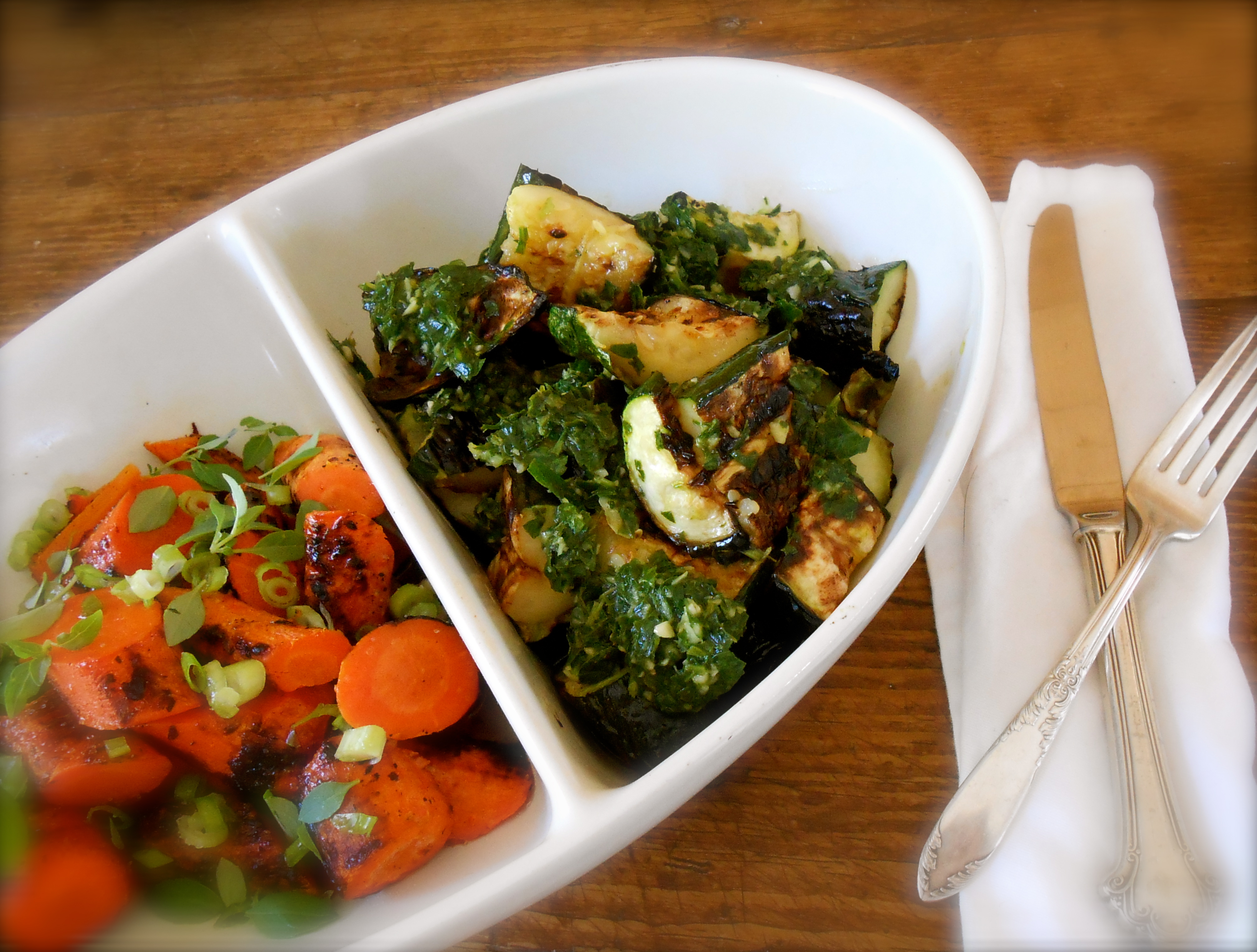
One of my favorite summertime dinners is grilled vegetables. I delight in lighting the mesquite charcoal and piling as many vegetables as I can fit onto the grill. This particular evening we grilled carrots, zucchini and a whole head of garlic.
Carrots are topped with olive oil, scallions and bush basil. The zucchini has a gremolata style sauce made with parsley, garlic, olive oil and lemon.
Ingredients
- 4 medium zucchini, sliced in half
- 5 medium carrots, peeled, if you prefer
- a little olive oil
- sprinkling salt
- handful of flat leaf parsley
- 3 tablespoons lemon
- 2 cloves garlic
- 3 scallions, finely sliced
- fresh basil
- 5 tablespoons olive oil
After cutting your vegetables brush all sides with olive oil and set aside. Once your charcoal is ready or your grill is hot begin with the carrots. Carrots take a good 15 minutes longer to soften up then the zucchini. My grill was far too hot and the carrots started to char. Turn frequently to prevent too much charring and move to a cooler area of you grill. If they do char too much you may use a peeler to peel away the black areas once they cool off. After 15 minutes add the zucchini to the grill and cook 15-20 minutes until tender and brown.
Remove from the grill and toss with your herbs and dressings.
g r e m o l a t a f o r z u c c h i n i
Using a food processor, whizz 3 tablespoons of olive oil with handful of parsley, two garlic cloves and 3 tablespoons of lemon juice. Add a little salt and toss with zucchini.
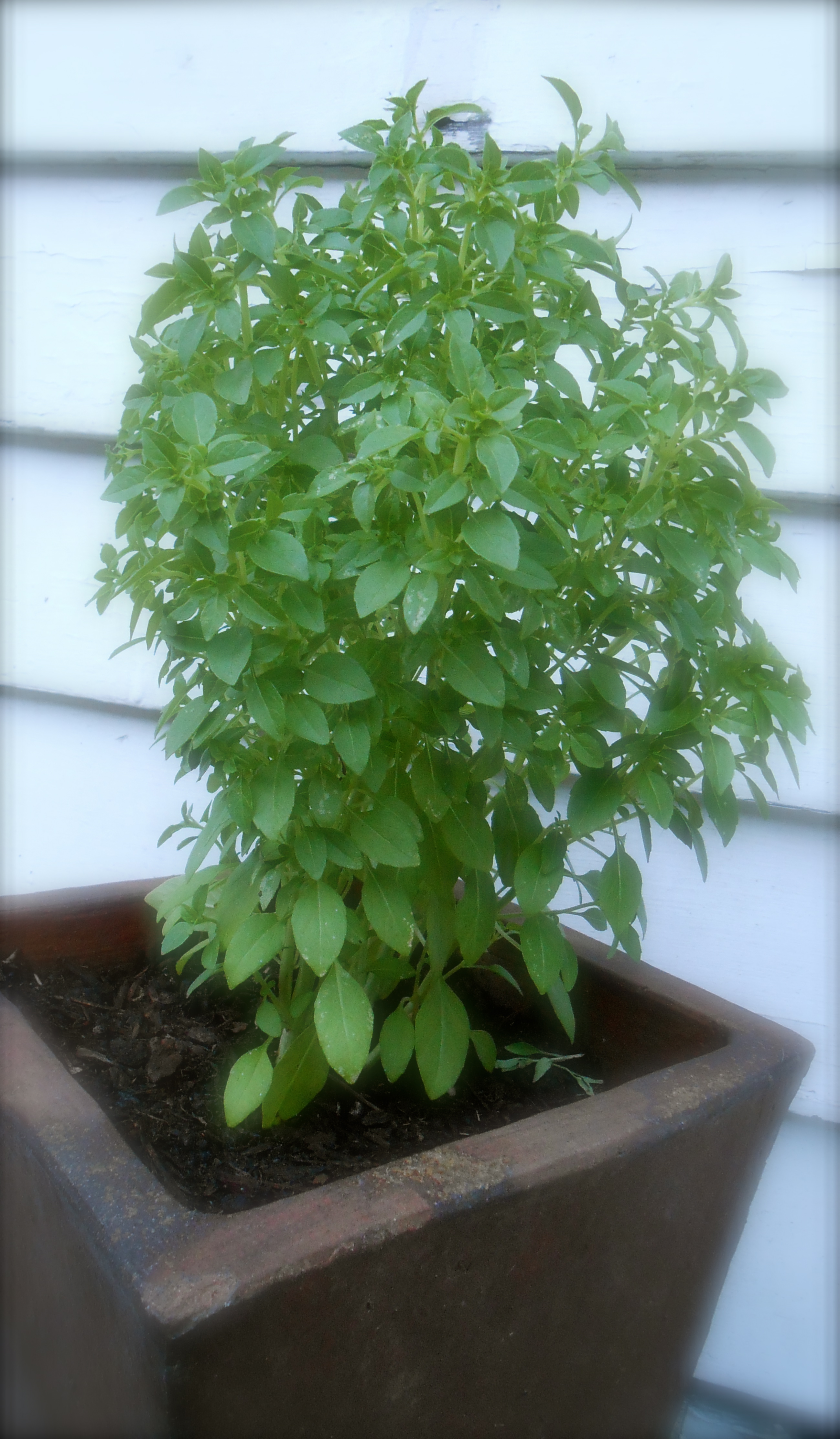
b u s h b a s i l ( a. k. a. g r e e k b a s i l )
Where have I been? I have been buying herbs for years and particularly basil. This is the first year I have seen this basil varietal. The leaves are very small and have a slightly floral aroma. I have seen these trimmed into a cute little topiary trees. Mine stands about 14 inches tall. I purchased it at the farmer’s market for $2. As you can imagine, I was thrilled.
flounder salad
July 12, 2013 § 35 Comments
I found fresh wild caught flounder at the market the other day. My plan was to go home and make tacos. I knew I wanted something lightly spiced with garlic and herbs. What I didn’t expect was the flavor and texture of this fish to be astoundingly delightful. Once I tried a taste I knew this would be a great fish for salad and I gave up on the taco idea.

I dusted the flounder lightly with flour, added a little salt and pepper and pan cooked it in hot olive oil. Once the flounder was cooked, using the same pan, I added chopped garlic, cilantro, a squeeze of lemon juice and a sprinkling of pimentón de la vera (sweet smoked paprika). Topping the flounder with these crispy spicy bits was simply delectable.
The flounder was served on a bed of mixed wild greens, topped with grated purple cabbage, tzatziki, cilantro sprigs and a few lime slices. I made the tzatziki before starting the fish. I highly recommend using this in place of a salad dressing.
I n g r e d i e n t s
- 1.5 pound fresh wild caught flounder filets
- 4-5 tablespoons olive oil
- 1/4 cup flour
- salt and pepper
- 3 garlic cloves, chopped
- 1/2 cup cilantro, coarsely chopped
- juice of 1/2 lemon
- 1 teaspoon sweet smoked paprika (or to taste)
- three handfuls of mixed wild greens
- 1/2 cup grated purple cabbage for serving
- a few springs of cilantro for serving
- lime slices for serving
Wash the flounder and pat it dry with paper towels. Set a large skillet over medium high heat and add 3 tablespoons of olive oil. Dust both sides with flour. Set the fish in the skillet, sprinkle with salt and pepper and cook for 3-5 minutes until golden. Turn the fish and sprinkle the other side with salt and pepper. Continue to cook until golden and crisp around the edges. Remove the fish from the pan to clean paper towels. Turn the heat to low and add cilantro and garlic to the skillet. Mix around and when it has become aromatic add the lemon juice and allow it to bubble a little. Sprinkle the smoked paprika, move around with a spatula until well combined and a bit crispy. Turn off heat.
Plate each serving. First a handful of mixed greens, fish, crispy/spicy bits, a little grated purple cabbage, tzaziki, cilantro sprig and a few lime slices.
Serves 4.
conchiglie with yogurt, peas and chile
July 10, 2013 § 60 Comments
I love visiting food blogs specifically looking for something to prepare for dinner…”tonight”! The other day I visited one of my favorite blogs (I have too many to count) and found this recipe. I am a huge fan of Molly’s blog and I took heed to her urgency about cooking this pasta. I ran out and pick up what I needed, came home that late afternoon and made one of the most delicious pasta dishes we have ever had. I never imagined pasta prepared with yogurt sauce. This was so creamy, yet light, a bit spicy from the chile, yet a little sweet from the peas, nutty from the pine nuts and lightly salty from the feta. All melty hot and delicious.
I have yet to pick up my copy of Jerusalem, by Yotam Ottolenghi and Sami Tamimi. Convincingly after making this recipe I am heading out today to do so.
I could never in my wildest dreams come up with this so I am giving you Molly’s posted recipe “verbatim”. And if you haven’t read Molly’s book A Homemade Life it is quite charming and features some incredible recipes.

A s w r i t t e n o n O r a n g e t t e . . . .
Pasta with Yogurt, Peas, and Chile
Adapted slightly from Jerusalem, by Yotam Ottolenghi and Sami Tamimi
The original version of this recipe calls for conchiglie, or shell-shaped pasta, but you could use any small pasta shape you like: orecchiette, penne, farfalle, and so on.
If you have some exotic type of dried chile, like Urfa chile, Aleppo chile, or Kirmizi biber, you lucky lucky dog, this is a great place to use it. If not, you can use regular red pepper flakes. I happened to have some Aleppo chile, and though it was ground, not in flakes, and probably a few years old, it worked beautifully. Oh, and if you’re worried about the amount of heat, consider starting with a little less of the chile than what is called for – or just don’t put much chile oil on your pasta.
- 2 ½ cups (500 g) whole-milk Greek yogurt
- 2/3 cup (150 ml) olive oil
- 2 medium cloves garlic, crushed or pressed
- 1 pound (500 g) fresh or thawed frozen peas
- Kosher salt
- 1 pound (500 g) pasta shapes of your liking
- Scant ½ cup (60 g) pine nuts
- 2 teaspoons Turkish or Syrian chile flakes, or red pepper flakes
- 1 2/3 cups (40 g) basil leaves, coarsely torn
- 8 ounces (240 g) feta cheese, coarsely crumbled
In the bowl of a food processor, combine the yogurt, 6 tablespoons (90 ml) of the olive oil, the garlic, and 2/3 cup (100 g) of the peas. Process to a uniform pale green sauce, and transfer to a large mixing bowl.
Bring a large pot of water to a boil, and salt it until tastes like pleasantly salty seawater. Add the pasta, and cook until it is al dente. While the pasta cooks, warm the remaining olive oil in a small frying pan over medium heat. Add the pine nuts and chile flakes, and cook for 4 minutes, or until the pine nuts are golden and the oil is deep red. Also, warm the remaining peas in some boiling water (you could scoop out a bit of the pasta water for this); then drain.
Drain the cooked pasta into a colander, and shake it well to get rid of excess water that may have settled into the pasta’s crevices. Add the pasta gradually to the yogurt sauce; adding it all at once may cause the yogurt to separate. Add the warm peas, the basil, feta, and 1 teaspoon kosher salt. Toss gently. Serve immediately, with pine nuts and chile oil spooned over each serving.
Yield: about 6 servings
spaetzle with brown butter sage
July 8, 2013 § 35 Comments
I made spaetzle this weekend. I have been wanting to make this for years and decided it would be a nice side dish with our grilled salmon. I searched around and found several recipes which all differed slightly. I got caught up in the Smitten Kitchen blog reading her post and the 400+ comments regarding her spaetzle. I ended up using a recipe from this blog. I really like her uncomplicated approach. It was just what I needed when I was feeling a little intimidated by the numerous other recipes. Some things need not be complicated. Spaetzle is one of them. I used brown butter and sage to flavor the spaetzle, then at the last minute I added cream. In hindsight the cream was unnecessary. I knew it right when I poured it in the skillet. However, it was out of this world delicious! As comforting as a good homemade mac and cheese. If you are serious about making spaetzle take a look at The Tasty Kitchen blog for a detailed tutorial.
- 2 whole Eggs, Beaten
- ¾ cups Water
- 1-½ cup All-purpose Flour
- ¼ teaspoons Salt
- drizzle of olive oil
- 2 tablespoons butter
- 5 large fresh sage leaves, sliced
- 1/2 cup cream (optional)

Bring a large pot of water to boil and add a bit of salt .
Add flour and salt to a large bowl and mix together. Beat the eggs and add them to your flour mixture. Add water and stir well to work out all the lumps.
Using your colander and spatula, pour the dough into the colander. Keep the colander above the steam so it doesn’t cook before it gets pushed through the holes. Press the batter through the colander with the spatula. Drops will fall into the water and cook instantly. Boil for 3 to 4 minutes. Remove the spaetzle from the water and strain it into a bowl. Toss with a bit of olive oil to prevent it from sticking together.
Heat the butter in a large skillet over medium high heat. Add the sage cook until aromatic. Toss in the spaetzle and brown to your liking. Here is where I added the cream (unnecessary) and allowed to simmer for 5 minutes stirring occasionally.
Serves 4, as a side dish
finnish strawberry pancake
July 3, 2013 § 45 Comments
After rising early last week I sat down with a cup of coffee and started reading the latest posts on my favorite blogs. I found this marvelous breakfast recipe from thethankfulheart. Having all the ingredients on hand I stood up and made Rhonda’s finnish pancakes. Right then and there, I made it and it was out of this world. Rhonda used raspberries in her pancake and I only had strawberries. However, I am certain these finnish pancakes are wonderful whatever fruit is used. I imagine peaches a little later in the season.
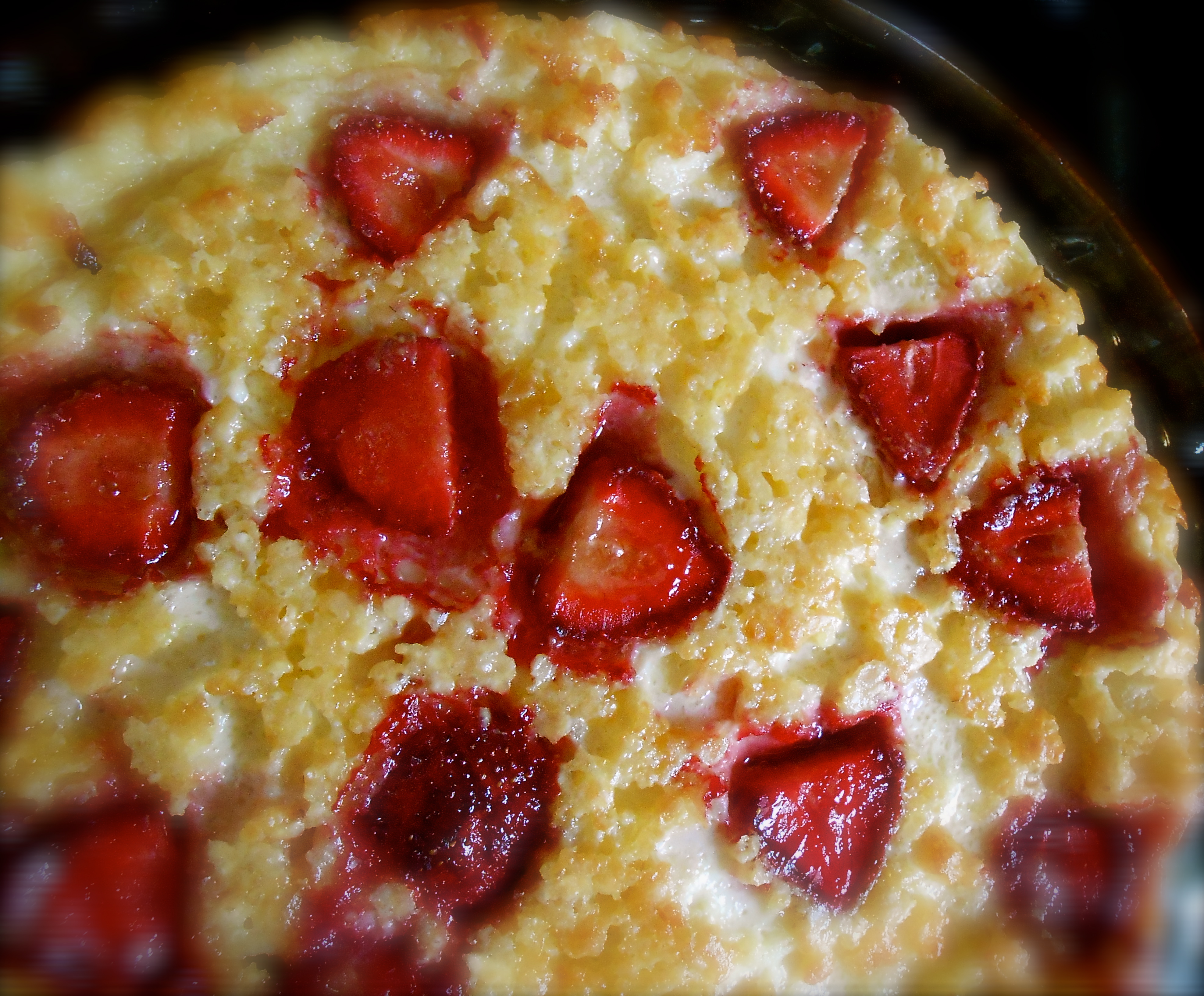
You know this is good when you leave it on the stove with one piece missing only to come back an hour later and it was gone! Yes, the 15 year old of the house got ahold of it! He said he couldn’t stop eating it after pouring pure maple syrup on top.
Here is the recipe exactly how Rhonda posted it. However, I know you would enjoy a visit to her blog.
- 1 cup flour
- 2 tab. sugar
- 1/4 tsp. salt
- 2 cups milk
- 1/4 cup melted butter
- 2 eggs
- 1 tsp. vanilla
- 6 oz. box of raspberries [or in this case, strawberries](about a cup)
- 1/4 cup sugar
In a mixing bowl stir together the flour, sugar and salt. Then whisk in the milk, melted butter, eggs and vanilla. Pour is it all into a 10″ baking dish sprayed with cooking spray. Sprinkle the raspberries and sugar on top and pop it into a 400 even for 45 minutes until it’s puffy and nicely browned.
orecchiette pasta with cilantro pesto
July 1, 2013 § 32 Comments
We are finally having HOT sunny days here in Seattle. Thank goodness for the tomato plants who have been very patiently waiting for the sun during the past three weeks. Seattle can be a unkind to tomatoes. Typically my plants are late bloomers and by the time their skins should turn red a blanket of clouds cover the sun once again leaving them an orange hue rather than red and a good supply of green ones too. I have learned it is best to plant “little” tomatoes such as cherry, grape, sun gold and/or a medium size roma varietal for our short lived tomato growing season. However, it could just be me and my lack of tomato growing knowledge.

s u g a r p l u m g r a p e t o m a t o e s
I have a pasta recipe here which requires only one burner on your stove for boiling the orecchiette. A summery fresh pasta while keeping the heat out of the kitchen!
I n g r e d i e n t s
- 1 pound good quality orecchiette
- 2 bunches cilantro, washing and thick stems removed
- 3 cloves garlic, smashed and peeled
- 1/2 cup pecans
- 1/2 cup olive oil
- 2 heaping tablespoons plain greek yogurt
- 1/2 cup grated parmesan cheese
- salt to taste
- sugar plum grape tomatoes
Bring a large pot of salted water to a boil. Add the pasta, and cook until it is al dente. While the pasta cooks prepare the pesto.
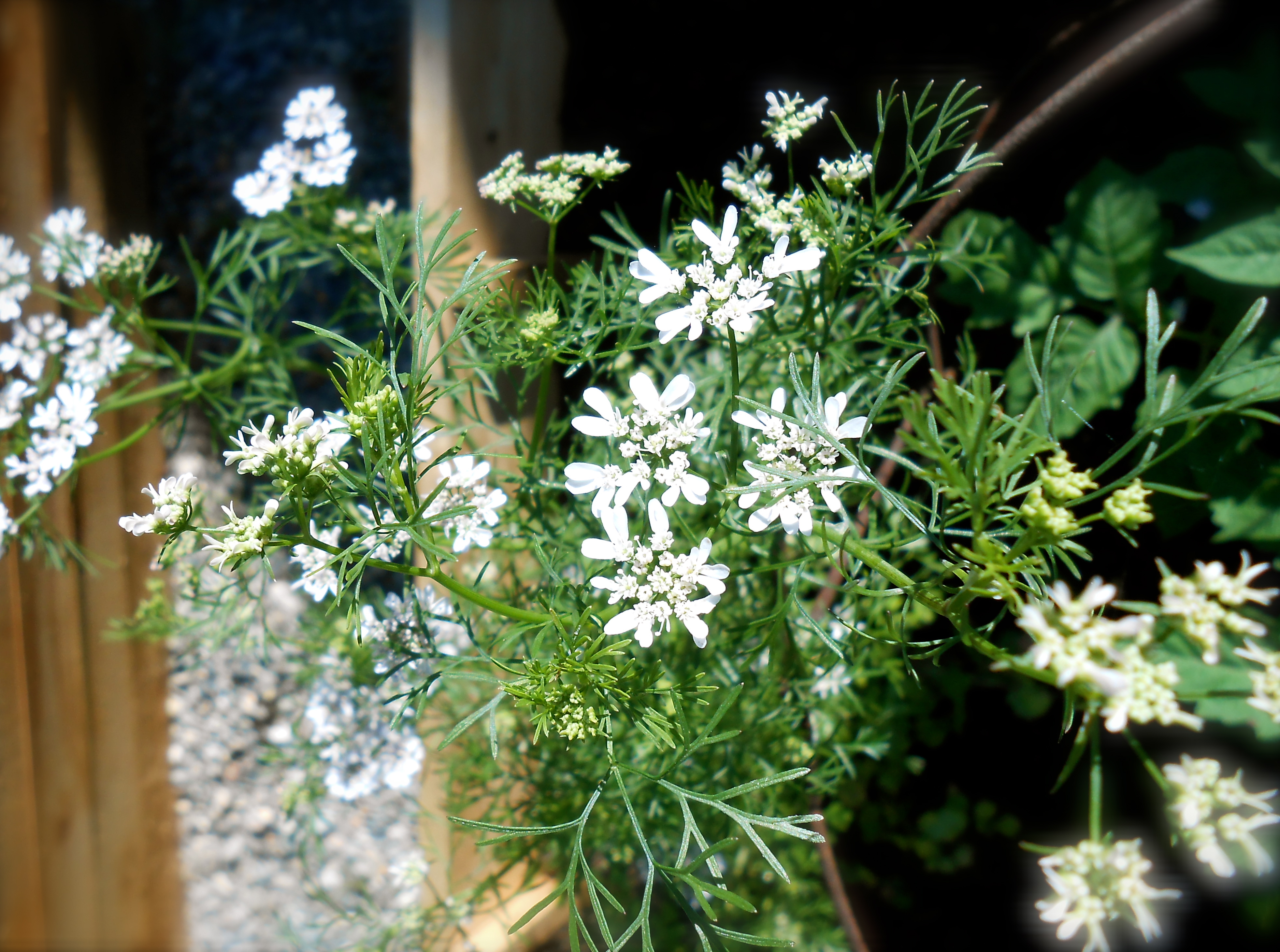
f l o w e r i n g c i l a n t r o
Place cilantro in food processor and whizz until finely chopped. Add the remaining ingredients and whizz until it is a well mixed pesto.
Slice sugar plum grape tomatoes into small bits and set aside.
Drain the cooked pasta without shaking the colander too much leaving a trace amount of the cooking water. Return to the pot and stir in the pesto. Taste to see if you need to salt. Place in serving bowls topped with sliced sugar plum tomatoes and a sprinkling of freshly grated Parmesan.
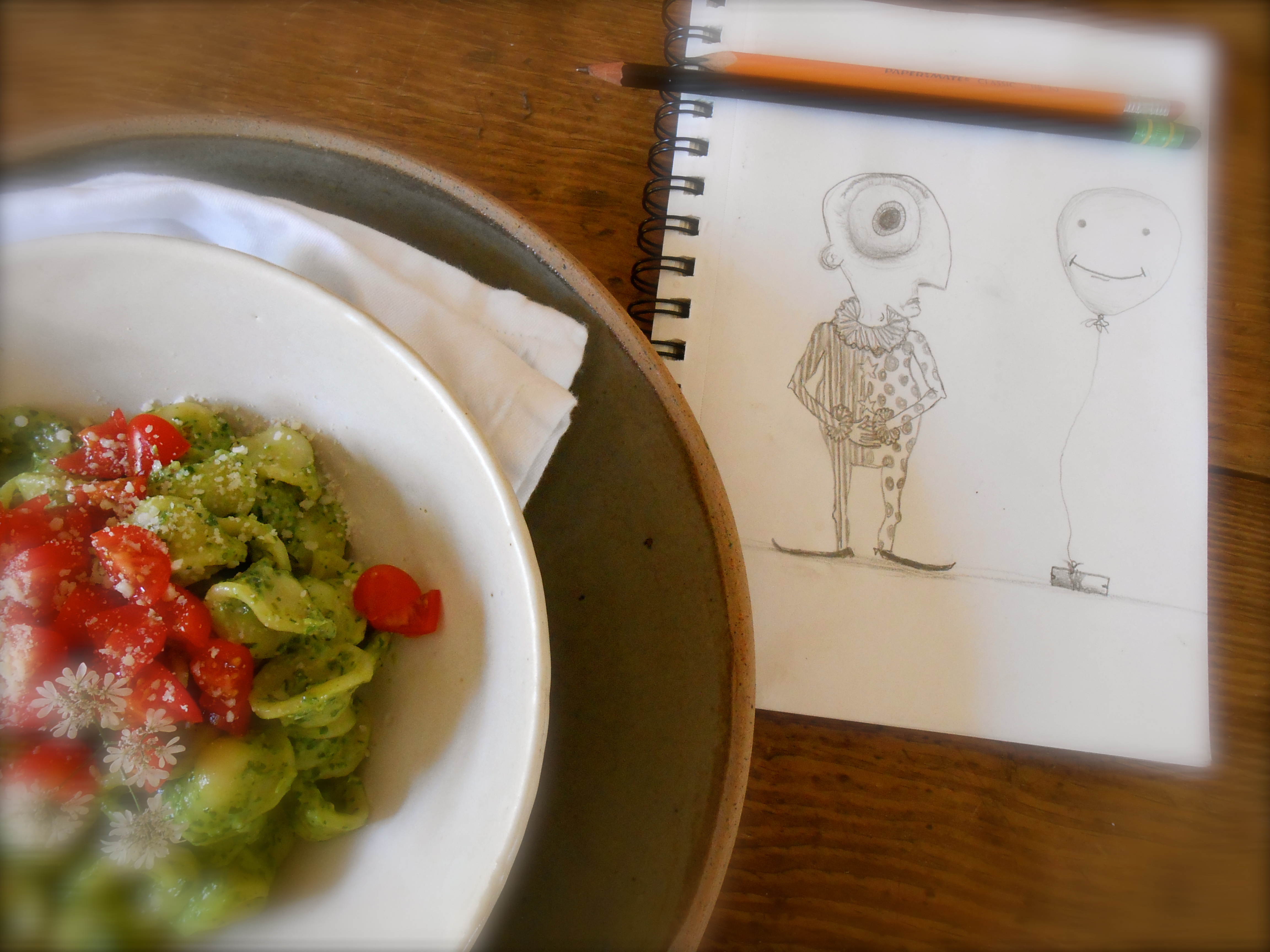
orecchiette pasta with cilantro pesto and a page in my son’s drawing journal
Serves 4
buon appetite.
asparagus lasagne
June 28, 2013 § 43 Comments
We have been cooking up bundles of asparagus this season. I am feeling as though we have come to the end of our season and this lasagne was my last act. I delighted in preparing this baked dish of luscious pasta layered with béchamel sauce, steamed asparagus, cheese and potatoes. The process was very satisfying and somewhat a test of my kitchen organizational skills. Preparing the layer ingredients prior to making the béchamel sauce helps to keep order in the kitchen. This is the first time I made a garlic, onion and thyme infused béchamel sauce and it is an especially nice flavor for the potatoes.
This is one of those posts. The dinner turned out perfect and the photographs didn’t. I almost scratched the whole idea of posting it and then something occurred to me. This lasagne is so delicious… I have to share the recipe!
I always have a sense of satisfaction and accomplishment when I place a lasagne in the oven. I just wish I had the same feeling about my photographs…

L a s a g n e
- 1 pound asparagus, trimmed
- 3 medium yukon gold potatoes, sliced into 1/8 inch thick rounds
- 12 ounces lasagne noodles
- 1 tablespoon olive oil
- 1 1/2 cup shredded aged white cheddar
- 1/2 cup freshly grated parmesan
- 2 tablespoons unsalted butter, cut into pieces
- chopped fresh parsley
Bring two large pots of salted water to a boil. In one pot add the asparagus and the other add the potatoes. Cook the asparagus 3-5 minutes until crisp tender. Remove using a skimmer and transfer to a bowl of ice cold water. Drain and pat dry. Keep the asparagus water boiling. Cook the potatoes until almost tender, 10 minutes. Drain and set aside. Place 1 tablespoon of olive oil into the boiling asparagus water and add the lasagne noodles a few sheets at a time stirring to keep separate. Cook until barely tender. Drain and set aside.
B é c h a m e l S a u c e
- 3 cups milk
- 1 small onion, sliced
- 2 garlic cloves, smashed and peeled
- 3 sprigs of fresh thyme
- 6 tablespoons unsalted butter
- 3 tablespoons all purpose flour
- 1/4 cup grated parmesan
Bring the milk, onion, garlic and thyme to a simmer in a medium saucepan over medium heat. Remove from the heat and allow it to sit and infuse of 10 minutes. Strain, discarding the solids. Melt the butter in a medium saucepan over medium low heat. Whisk in the flour and let it bubble without browning for 2 minutes. Whisk in the warm milk and bring to a simmer. Continue cooking whisking often until the sauce is smooth about 5 minutes. Remove from the heat, stir in the parmesan and season with salt and pepper. You may press a sheet of plastic wrap on top to keep a skin from forming.

A s s e m b l e
Preheat oven to 350°. Lightly butter a 13×9 inch baking dish. Spread a thin film of the béchamel sauce in the bottom of the dish. Arrange 3 or 4 pasta sheets in the dish, slightly overlapping as needed. Spread with one third of the sauce, half each of the potatoes, asparagus and aged white cheddar. Top with another layer of pasta, half of the remaining sauce and the remaining potatoes, asparagus and cheddar. Finish with a layer of pasta and spread with the remaining sauce. Sprinkle with the Parmesan cheese and dot with the butter.
Bake until the sauce is bubbling and the top is golden, about 30 minutes. Let stand for 10 minutes before serving.
Serves 6
buon appetite.
polenta
June 26, 2013 § 57 Comments
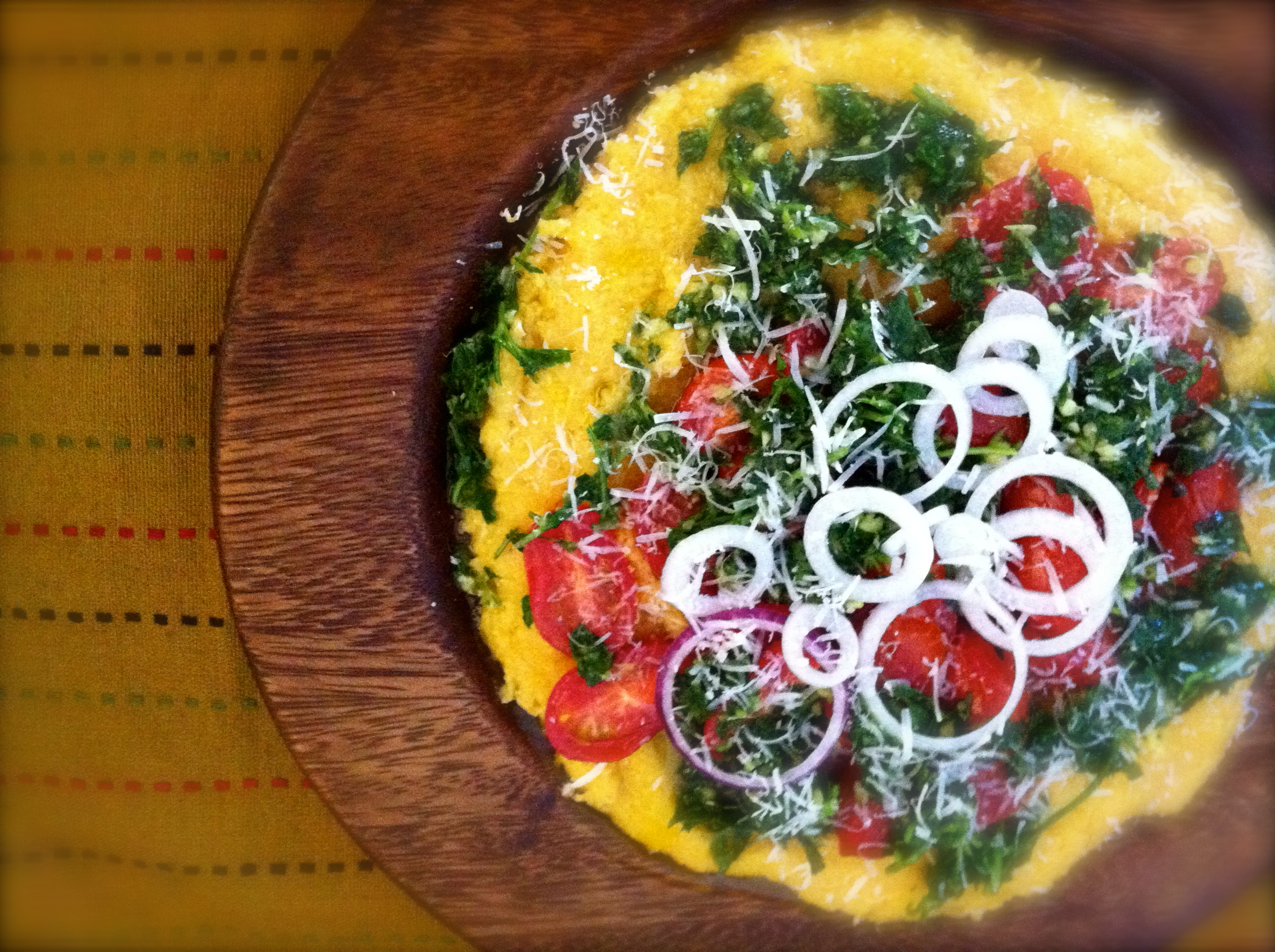
Polenta is one of my best loved dinners and I enjoy it served creamy and cheesy, delicate and sweet, as well as complex and hearty. This polenta recipe is a bit hearty and crowned with a fresh parsley pesto and cherry tomato sauté. I particularly enjoy Bramata polenta. It is a rustic stone-milled corn which is moderately coarse for a thicker consistency.
My first polenta dinner was quite an experience. I had a friend over who wanted to prepare a classic dish he had as a child growing up in Italy. In my friend’s opinion the only way polenta should be eaten is with a rich meat sauce. His plan was to prepare Polenta with Chicken Livers. Once the polenta was cooked it was poured directly onto my dining table and topped with the chicken liver sauce. Although I was very impressed by the presentation, I do not have the palate for chicken livers so I kept trying to scrape the edges where the sauce didn’t touch. Even without the sauce, I was captivated by the creamy texture and tiny bits of corn meal similar to the grits my mom would prepare.
Throughout the years I have formed my own opinions about preparing and serving polenta. When cooking polenta, for added flavor I like using broth rather than water. Sometimes I add a few tablespoons of rosemary. I always include butter and when I am preparing a savory polenta a nice grated parmesan. To top it off…tomato sauce, pesto, honey and butter, or simply a handful of parmesan and a drizzle of olive oil.

polenta with cherry tomatoes and parsley pesto
p o l e n t a
- 1 cup good quality polenta
- 6 cups of vegetable or chicken broth
- 2 tablespoons butter
- 1/2 cup grated parmesan cheese
p e s t o
- large handful of parsley
- 1/3 cup olive oil
- 1/4 cup pine nuts or walnuts
- 3 cloves garlic
- 1/2 cup grated grana padano or parmesan cheese
- salt to taste
t o m a t o s a u t e’
- 1 pint of cherry tomatoes
- 2 tablespoons olive oil
- sea salt to taste
In a large pot heat 6 cups of broth. When the broth is about to boil, sprinkle in the polenta. Stir continuously over a low heat until it is a thick smooth mass. Continue cooking on low heat for about 40 minutes, stirring slowly and evenly. If polenta starts to spatter turn your heat lower and stir continuously until it settles. I usually stir once every 3-5 minutes until done.
While polenta is cooking prepare pesto. Place all pesto ingredients in a food processor and whizz until well combined. Set aside.
Place a non stick skillet on the stove with 2 tablespoons olive oil over medium high heat. Saute’ tomatoes for 2 minutes until soft. Season with a pinch of salt.
Once polenta is cooked add butter and parmesan, mix well and pour onto a large serving platter (or directly onto your table!). Top with pesto, tomatoes, grated cheese of choice and serve right away.
Serves 4
buon appetite.
walla walla sweet onion soup and herb farmers five cheddar biscuits
June 24, 2013 § 42 Comments
I am always delighted when mid June rolls around and I stumble upon the first harvest of Walla Walla Sweet Onions. Walla Walla is a county in southeastern Washington and is known for it’s sweet onions. These are a very pleasant mild onion which easily can be eaten raw on salads and sandwiches.
A cool rainy day always triggers my soup craving so I set out to make a light soup. I was toying with the idea of french onion soup when I spotted the Walla Walla Sweet Onions. I purchased four sweet onions, the most ripe juicy strawberries I have ever tasted and headed home.

I have a little cook book titled “Fresh” by John Bishop which features wonderful seasonal recipes made with local foods (Pacific Northwest). I found today’s soup recipe along with an herbed cheddar cheese biscuits. I struggle as a baker. I can usually bake a good simple quick bread, but if I have to knead or rise the dough, I fail. The recipe specifically said to “turn the dough onto a lightly floured surface and knead 10 times”. I figured, “how can I fail?”.

biscuits served with butter and sun dried tomato pesto
The biscuits would have made my mom proud. The soup was naturally sweet, creamy and keeping the spices at a minimum allowed the flavor of the onions to come through. While the soup is simmering, prepare the biscuits.
h e r b e d c h e d d a r c h e e s e b i s c u i t s
- 2 cups all purpose flour
- 1 tablespoon baking powder
- 1 teaspoon baking soda
- 1 teaspoon salt
- 1/3 cup butter
- 1 tablespoon finely chopped fresh thyme
- 2 teaspoons finely chopped fresh rosemary
- 3/4 cup grated cheddar cheese
- 3/4 cup plain yogurt
- 1 tablespoon milk
Preheat oven to 375° F. Line a baking sheet with parchment paper.
In a large bowl, combine flour, baking powder, baking soda and salt. Add butter and work into the flour mixture with your fingers until the dough has the consistency of cornmeal. Stir in thyme and rosemary. Make a well in the center of the dry ingredients.
Place cheese, yogurt and milk in a small bowl and stir to combine. Pour the yogurt mixture into the well and combine lightly until the dough forms a ball. Turn the dough onto a lightly floured surface and knead 10 times.
Roll out the dough to a thickness of 1 inch. Using a 2 inch round cookie cutter, cut out 12 biscuits. Arrange biscuits 2 inches apart on the baking sheet and bake in the top third of the oven for 15 to 20 minutes, until lightly golden. Transfer to a cooling rack.

s w e e t o n i o n s o u p
- 3 tablespoons butter
- 6 cups sweet onions, thinly sliced and quartered
- 4 cloves garlic, chopped
- 1/4 cup all purpose flour
- 1/2 cup dry white wine
- 6 cups stock, vegetable or chicken
- salt and pepper
- 1/2 cup whipping cream (optional)
- 2 tablespoons fresh spring onions, sliced
Melt butter in a stockpot on medium heat. Add onions and garlic. Cover, reduce the heat to low and cook for 15 to 20 minutes. Remove the lid, stir in flour and cook for 5 minutes. Deglaze the pot with wine.
Add stock, salt, pepper and increase heat to medium high. Bring to a boil, reduce the heat to low and simmer uncovered for 30 minutes. Stir in cream and simmer for another 10 minutes.
Ladle soup into warm bowls and sprinkle with freshly sliced spring onions.
Serves 4
buon appetite.
spinach with garlic, olive oil and hot pepper (spinaci con aglio, olio, e peperoncino)
June 21, 2013 § 35 Comments
A very nice uncomplicated classic Italian side dish. Just a quick sauté of spinach, garlic, hot pepper flakes and olive oil. An effortless side and profoundly delicious. Ambitious as I am about serving greens at dinner sometimes I get stuck in a rut of humdrum salads. I like to serve this as an alternative. In my opinion, leafy greens never require much attention. Steamed or sautéed and simply dressed in olive oil and a little salt is perfect. However, sautéed and given a little spice is a fine improvement. Any leafy green may be substituted and many times I have used chard, kale, mustard greens or beet greens in place of the spinach. Keeping an eye on the greens as they cook is necessary. Some greens such as chard and kale require a little more time in the sauté pan than spinach, beet greens or mustard.
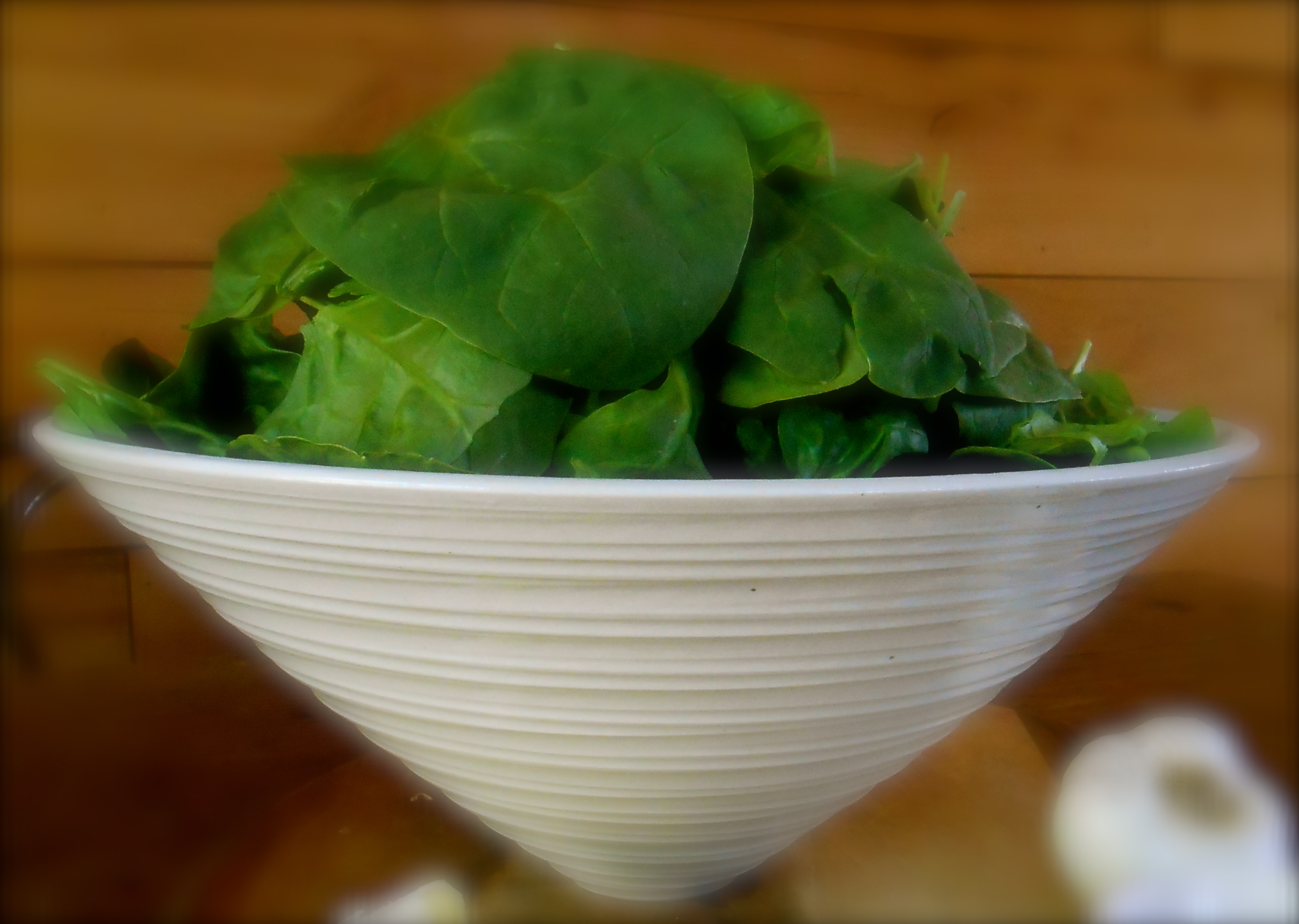
A huge towering bowl of fresh spinach reduced to a small bowl of sautéed spinach.
I n g r e d i e n t s
- 2 pounds spinach, washed and dried (a little damp is ok)
- 4 tablespoons olive oil
- 3 cloves garlic, chopped
- pinch of dried hot pepper flakes (to taste)
- salt
- 1 lemon, cut into wedges
Once the spinach is clean, shake it to remove any excess liquid. A little damp is good for cooking. Warm the oil in a large, wide pot over medium low heat. Add the garlic and hot pepper flakes. Sauté until the garlic begins turning golden. Add the spinach and a pinch or two of salt. Turn up the heat, sauté until the spinach has turned a nice green hue. Serve with lemon wedges.

Serves 4.
buon appetite.
 COTTAGE GROVE HOUSE